
Those who live with cats have witnessed a scene as commonplace as it is intriguing: the feline approaches, circles its human's legs, and begins to rub insistently against them, sometimes even brushing against the face or arms. For many, this behavior is automatically interpreted as a sign of affection , a kind of silent hug. However, behind this seemingly simple gesture lies a complex system of feline communication that combines instinct, emotions, and a deep connection with the environment.
Unlike other domestic animals, cats don't express themselves directly or obviously. Their language is subtle , full of signals that go unnoticed if you don't know them. Body rubbing is one of those key signals. When a cat rubs against a person, it's not just seeking physical contact, but sending a clear message using the most important sense for its species: smell .
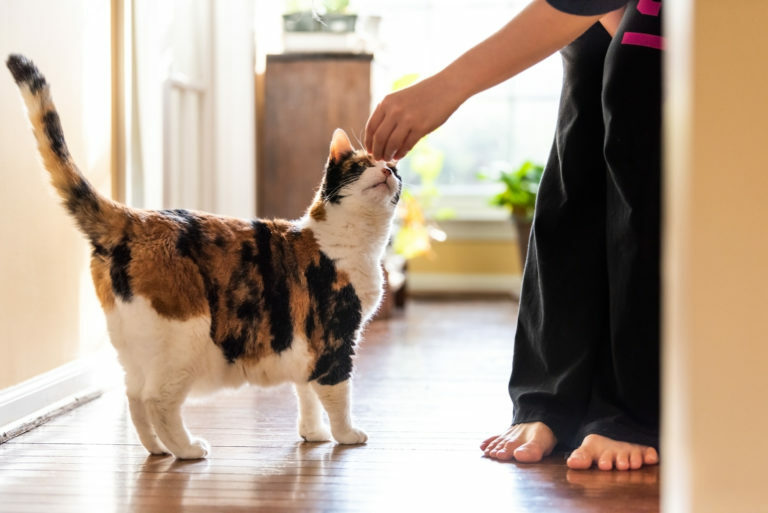
Cats are deeply territorial animals . Their world is organized not only by what they see, but also by what they smell . They have scent glands in different areas of their bodies , especially on their cheeks, around their mouths, on their foreheads, and at the base of their tails. Every time they rub against an object, another animal, or a person, they release pheromones that act as an invisible mark. It's their way of indicating that that element is part of their safe haven.
When a cat rubs against you, it's actually declaring something very specific: it's welcoming you into its social group . In nature, cats that live together and tolerate each other share their scent as a form of mutual recognition. That's why this gesture isn't done with just anyone. It's a sign of trust , acceptance, and belonging. It's no exaggeration to say that, from a feline perspective, this rubbing is equivalent to saying, "You're one of us."
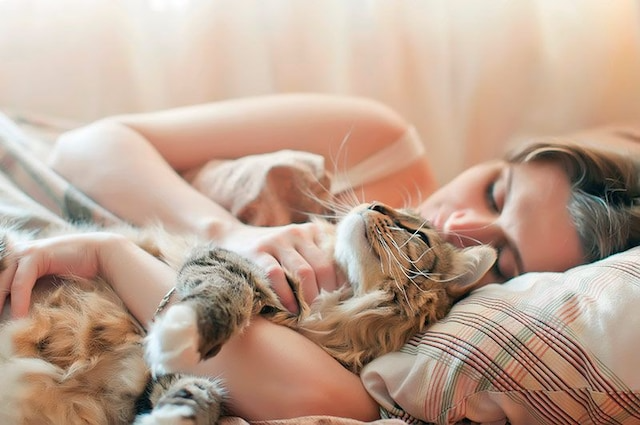
This behavior also serves an important social function. Many cats rub against their owners when they come home. That raised tail movement, accompanied by twists around the body, is a genuine welcome . It's their way of greeting, of acknowledging the return of someone important, and of reaffirming the bond after an absence. In their language, there are no words, but rather gestures full of intention.
Además del aspecto emocional, el roce puede tener un componente práctico. Los gatos aprenden rápidamente a comunicarse con los humanos y a obtener respuestas. Si un gato se frota contra ti y luego te mira fijamente o se dirige hacia su plato, probablemente esté pidiendo comida. Si lo hace cerca de una puerta o ventana, puede estar expresando curiosidad o deseo de explorar. El frotamiento, en ese sentido, también es una herramienta de interacción.
El olor cumple un rol central en la tranquilidad emocional del gato. Mezclar su aroma con el de su humano le genera seguridad. En momentos de cambios, como mudanzas, visitas o la llegada de otros animales, es habitual que el gato aumente este comportamiento. No es un capricho: es su forma de reafirmar que sigue estando en un entorno conocido y de reducir el estrés.
En algunos casos, el roce también puede funcionar como una afirmación de dominancia territorial, especialmente en hogares con más de un animal. Frotarse contra muebles, esquinas o personas puede ser una manera de reforzar su presencia frente a olores nuevos. Aun así, cuando este gesto va acompañado de ronroneos, parpadeos lentos y movimientos relajados, el mensaje es claramente positivo.
One particularly significant gesture is the well-known "headbutt," when the cat gently rests or pushes its head against the person. Far from being a casual collision, it is one of the most intense expressions of feline affection . It is a behavior reserved for strong bonds and demonstrates a high level of trust.
Responding appropriately to these gestures helps strengthen the relationship. Gently stroking areas where the cat tends to rub, such as its cheeks or behind its ears, reinforces this connection. However, it's also essential to respect its boundaries and understand that not every touch implies a prolonged invitation to physical contact.
Ultimately, when a cat rubs against us, it's not acting randomly. It's communicating trust , belonging , security, and, in many cases, genuine affection. Understanding this behavior allows us to better interpret its world and build a more harmonious relationship. For a cat, that small gesture has enormous meaning: it's its silent way of saying that we are part of its universe.


0 commentaires:
Enregistrer un commentaire