
The courts can offer treatment and a path away from incarceration. But in Illinois, only half of participants graduate, and many who might benefit never get a chance.
Court staff say graduation and reduced recidivism aren’t the only measures of success; they also point to reduced hospitalizations and improved quality of life, housing, relationships, employment and education. Those metrics can be harder to measure since courts often lose touch with participants after graduation, so the state has been developing an exit survey and collecting impact stories of graduates like Woodworth.
After being accepted into the program, Woodworth walked out of the lockup with a pair of jail-issued shoes and a paper booking slip. She moved to transitional housing. At the time, her husband was applying for drug court, and the court vetoed his application three times. Woodworth advocated for him, and he was eventually accepted and moved into a sober living house.
As they progressed through the programs together, the Woodworths moved into a home with roommates and found work at a Jimmy John’s sandwich shop. But when they discovered drugs in the home, they left, choosing to live in a tent for a couple weeks rather than be tempted. The court helped them pay for a hotel and connected them with housing assistance.
Woodworth graduated in 2024 after more than a year in the program. She now serves on her county’s reentry council and advocates for criminal justice reform. She’s still in the process of sealing her charges so they’re not publicly accessible. Her husband graduated in August 2025 after two years. He chairs Narcotics Anonymous meetings, works with young violent offenders and runs an emotional wellness art group.
“I never in a million years thought that recovery was possible,” Woodworth said.
Sanctions and rewards
In mental health court, judges use a system of sanctions and rewards to incentivize compliance. Rewards include praise, gift cards and necessities like diapers, toothpaste or socks. Sanctions include admonishments, writing assignments and jail time. Successful completion can lead to charges being dismissed and expunged. Failure can mean prison.
The courts typically focus on people who are high-risk and high-need, and most require a guilty plea. Court staff work in teams of a judge, prosecutor, defense attorney, probation officer, treatment provider, peer support specialist and case manager. Their camaraderie is often apparent at final graduation ceremonies, complete with pizza and cake.
At the state’s newest mental health court, in Kankakee, participants may receive fidget spinners, support from a service dog and the chance to spin a wheel for a prize. Last summer, a young woman who had been complying with regular drug testing received a hug from the judge and a box of Reese’s Pieces candy. A man who’d repeatedly missed appointments was sanctioned to 24 hours in jail and led out of the hushed courtroom in handcuffs.
Another participant, Sean Buchanan, pleaded to stay in the program. He had abused his medication, hallucinated and robbed an elderly acquaintance. He and his mother both asked the judge for another chance. But the judge cited a “concerning pattern” of behavior and cut him from the program. It was the court’s first termination.
“I was doing really good until I got put on that medicine,” Buchanan, 34, said on a call from prison, where he said he’s not receiving treatment for schizophrenia and bipolar disorder. “I was seeing things that weren’t real.”
People who don’t graduate tend to have refused treatment or committed new offenses such as resisting arrest, drug possession, damaging property or domestic violence, said Kelvin McCabe, a public defender in Rock Island County.
Access to housing, transportation, and inpatient treatment are major barriers. Most participants rely heavily on state and federal benefits such as Medicaid. A 21-day inpatient program could be $30,000, McCabe said, “so if they don’t have insurance, they’re certainly never going to be able to afford it because the people that we have are indigent or homeless.”
This is a central reality of mental health courts: Many of the factors that determine success sit outside the courtroom. Participants may falter not only because of their symptoms or decisions, but also because they cannot get into treatment, cannot keep insurance, or lose services when providers fall away. Staff, too, struggle with burn-out and turnover.
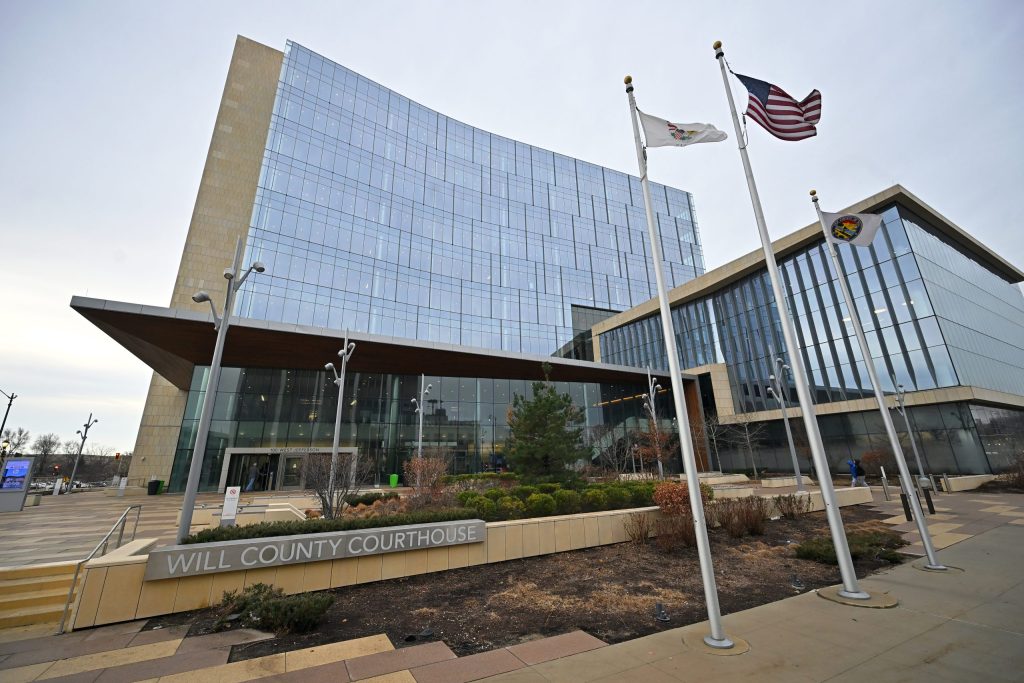
A 2022 independent review of Will County’s problem-solving courts surveyed participants on barriers to participation. They cited work conflicts, lack of transportation, physical and mental health symptoms, lack of child care and drug or alcohol use issues. Most participants relied on a public defender, and 39% reported being homeless at some point during the program.
“Be a little more flexible,” one respondent urged the court. Others recommended staff increase availability on weekends, allow Zoom appearances, provide child care, reduce jail sanctions and help participants regain driver’s licenses.
Another study, on Peoria’s courts, recommended providing bus passes and gas vouchers. “I didn’t have ample transportation,” one participant told researchers. “Anytime I left the house, it was like going on a vacation, you know, planning everything out.”
‘A relief let off your shoulders’
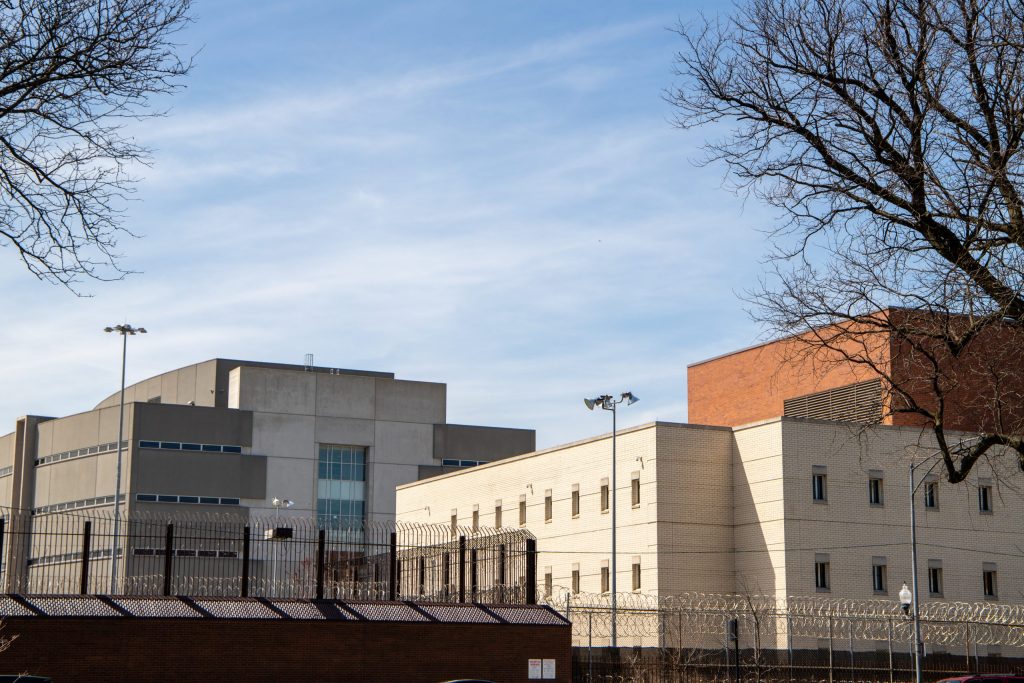
Daniel Brown, 43, has been in and out of jail in Illinois and Indiana since his early 20s. In 2015, he stole a bottle of alcohol and a box of mac and cheese. The theft landed him in Cook County Jail, where he stayed for months before pleading guilty to retail theft and being sentenced to mental health court.
Brown had dealt with mental illness his whole life, but it wasn’t until mental health court that he received a diagnosis: schizophrenia and bipolar disorder. “It made sense when they explained it, because it broke down a lot of things I was dealing with,” he said.
Brown said mental health court provided structure and support. Initially, it was difficult to forgo drinking and smoking marijuana. Eventually, Brown said, he “got tired” and “played the game.” He stayed at a specialized rehab facility in Evanston. Then, court staff helped him find an apartment in Cicero. Along the way, he participated in a documentary about mental health court.
Brown graduated in 2017 after two years and had his charge dismissed. “It’s like a relief let off your shoulders,” he said.
Cook County is one of at least two counties that expunge charges automatically. In others, graduates have to apply for expungement themselves. At least two courts don’t dismiss charges at all. Program durations also vary: sometimes longer than a typical criminal process, sometimes shorter.
Today, Brown regularly sees a psychiatrist and case worker and takes medication, which reduces his auditory hallucinations. Last year, he traveled to Jamaica for his father’s funeral. In his living room, he keeps a framed newsclipping of his judge’s retirement from mental health court, alongside a memorial card from the funeral and a Jamaican bank note.
“It gave me something to live for,” Brown said, “something better to do with my time.”
Millions don’t have access
On the second floor of the Kankakee County courthouse, a man appeared on the screen in an orange jumpsuit, asking to be admitted to mental health court. But while he had committed a crime in the county, he didn’t reside there and could not be admitted. As the judge prepared to end the call, the man made a final plea.
“What do I have to do to get my mental health right?” he asked the judge.
She wished him “good luck” and moved on to the next case.
“You hate to turn away somebody who really needs help,” Judge Lindsay Parkhurst said later in an interview. “… But you can’t give quality help if you’re diluting the services.”

Nearly two million people in Illinois — nearly 15% of the state’s population — live in counties with no mental health courts. Most courts only accept residents, but there is wiggle room. Kankakee has allowed people to relocate for the program, and Peoria has accepted residents from neighboring Tazewell. But it gets trickier when someone lives further away.
Retired Judge Mark Shaner previously oversaw 12 counties in southeastern Illinois, none of which have a mental health court. He said people in his circuit “certainly” need one, but that requires staff, funding and treatment providers. “Like so many things, it’s resources,” he said.
Champaign County is the most populous county in the state without a mental health court. It’s also an area of high need. A 2019 survey showed one in five residents reported having a mental illness — the highest percentage of any region in Illinois. The county previously operated a mental health court, but it shut down in 2013 due to disagreements between the state’s attorney and the judge overseeing the court. Other mental health courts have also closed.
About 1 in 6 people with a mental illness live in counties without mental health courts
Roughly 2 million people in Illinois live in one of the state’s 77 counties that don’t have a mental health court. That includes about 350,000 people with mental illness, based on 2019 survey data from the Substance Abuse and Mental Health Services Administration.
These counties tend to be more rural and have a median income 19% lower than counties with mental health courts.


0 commentaires:
Enregistrer un commentaire